Umbanda
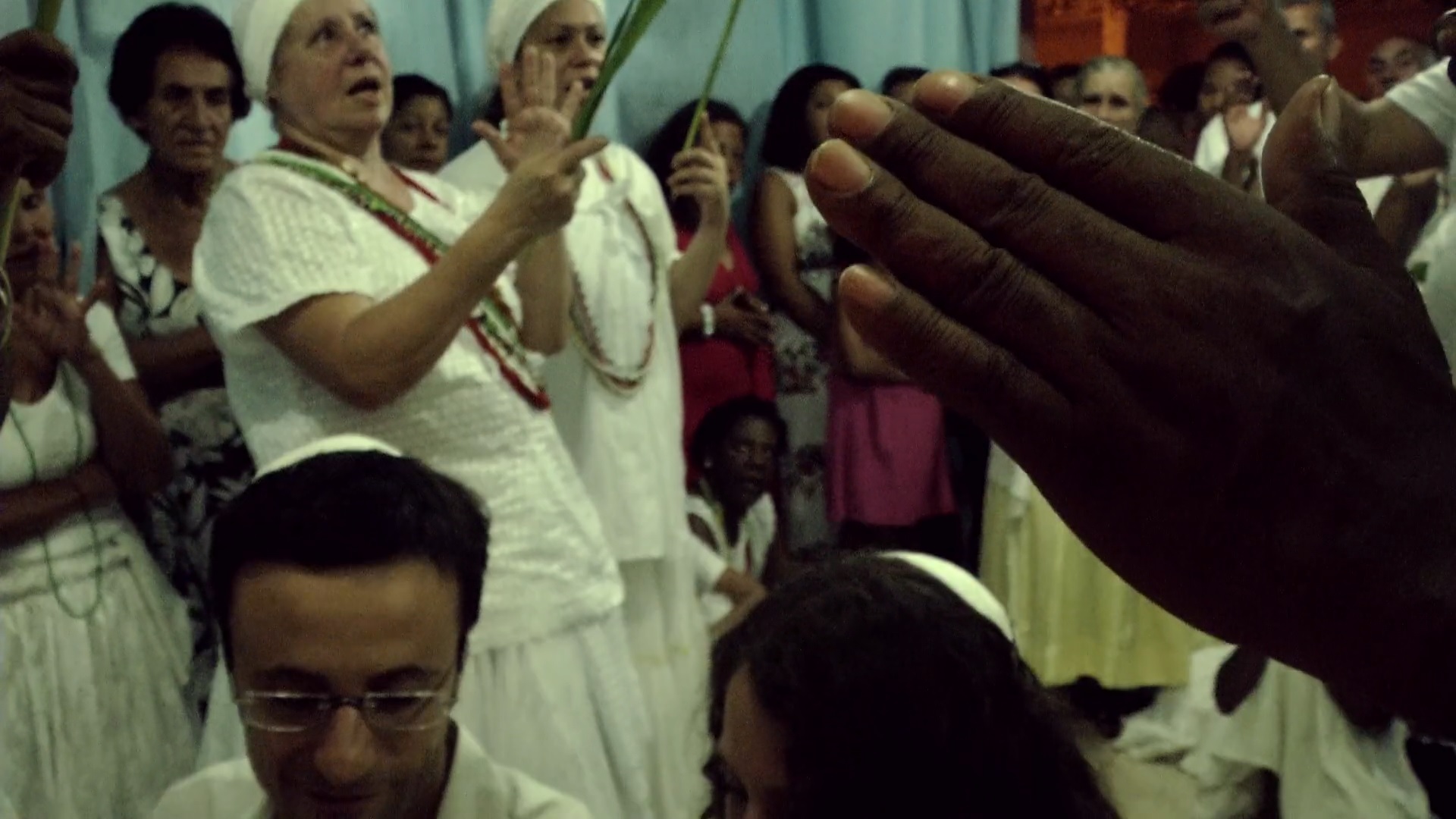
Jewish Umbanda ceremony, from Hibridos film series, 2018
Judeus no Espiritismo e na Umbanda: De entidades a adeptos (Alex Minkin, Revista ANTHROPOLÓGICAS, Brasil 2018)
Umbanda is a religious movement originated in Rio de Janeiro in early 20th century that combines African spirit possession cults and Spiritism of Allan Kardec with elements of South and North American indigenous religious/spiritual beliefs, Catholicism, Kabbalah and Rio’s urban folklore. ‘Umbanda reveals isomorphisms and similarities between so many cultures that it can be seen as exemplar of coexistence.’ says Mel Alexenberg, head of the Emuna College School of the Arts in Jerusalem in his “Educating artists for the future”. Read Alex Minkin interview for Russian magazine Katab.asia for more info about Umbanda and Spiritism.
The diversity and richness of Umbanda is as striking as it is still unknown to the world. According to the research released in Spring 2014 by our partners at PUC (University of Rio de Janeiro), there are 114 distinct varieties of afro-Brazilian religions identified only in the state of Rio alone, but it is estimated that there are over 300 types overall in the country.
In May 2014 a Brazilian judge decreed that Candomble and Umbanda are not to be legally considered religions in Brazil anymore. We participated in the campaign that later resulted in the reverse of this decision, but it shows that Afro-Brazilian religions are still stigmatized in the country and need our support.
Ticún’s creative activities in support of religious tolerance include cultural events to promote religious tolerance such as multimedia presentations of Afro-Brazilian Umbanda rituals in New York. “Last Wednesday night, when much of the Jewish community was still bolting bagels and lox to break the Yom Kippur fast, about 50 Jews were taking in the art and music of Umbanda, an eclectic religion unique to Brazil, at a downtown gallery,” wrote The Jewish Week.
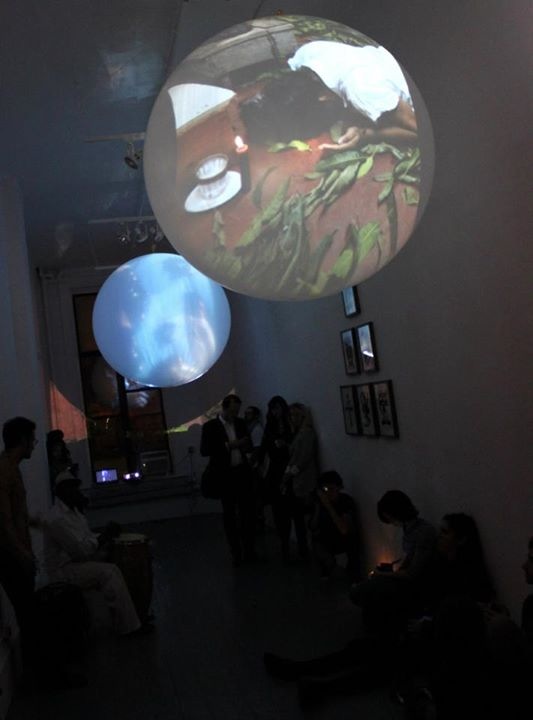
Ticún’s Umbanda event in NY
The photography is projected to large balloons transforming the gallery’s space and creating the immersible environment. Live performances by Café da Silva (Umbanda percussion) and Yesenia Selier (spirits of the ancestors dance) brought the vibes of Afro-Brazilian mysticism to Manhattan.
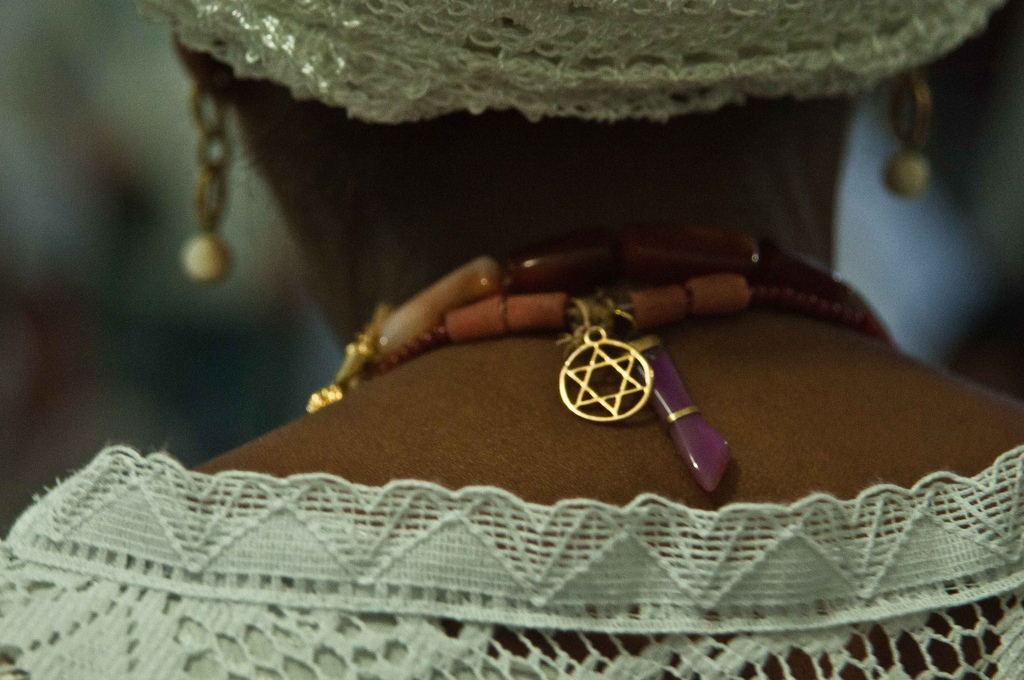
Photo by Bruno Morais/Pandilla Fotográfica
Discussion of religious tolerance and volunteering in Brazil follows the performance.

©Alexander Ra
Read more in the press release
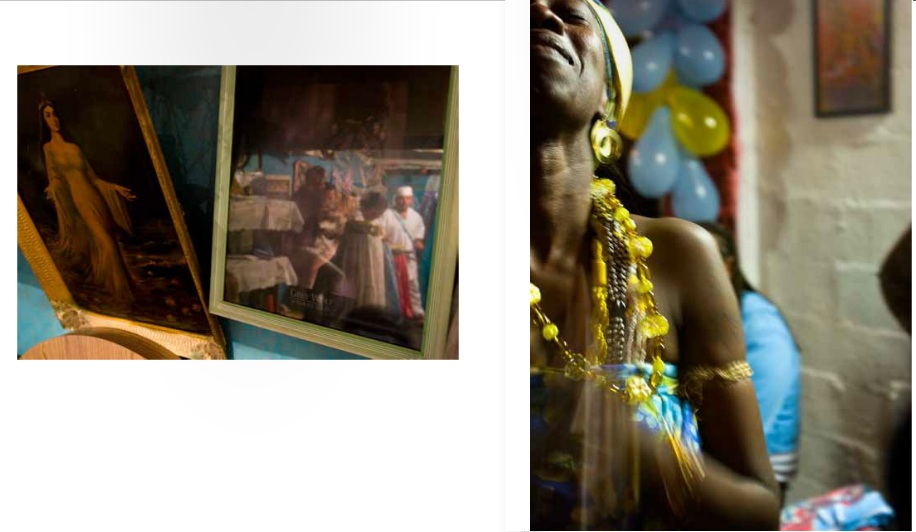
Marcello Vitorino’s
“Agô, Umbanda Temples”

Daniel
Protzner’s
“St. Sebastian”
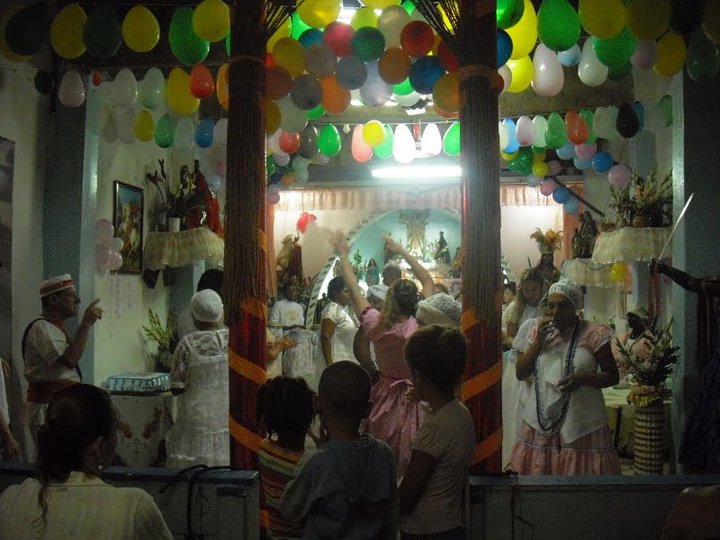
Tenda Espirita Vovó Maria Conga de Aruanda, RJ
PARTNERS|PARCERIAS:
 As fotografias de terreiros seriam fornecidas pelo Observatório de Favelas – organização social de pesquisa, consultoria e ação pública dedicada à produção do conhecimento e de proposições políticas sobre as favelas e fenômenos urbanos. Criado em 2001, o Observatório é desde 2003 uma organização da sociedade civil de interesse público (OSCIP). O Observatório iniciativas buscam impactar as políticas públicas de arte e cultura, evidenciando o papel dos espaços populares como matrizes da produção criativa.
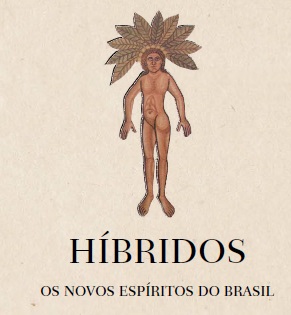 Um projeto de documentário e TRANSmEdIa de Priscilla Telmon & Vincent Moon
Com HÍBRIDOS, queremos estudar através das suas músicas, a renovação do sagrado e de seus cultos no Brasil, que reúnem pessoas de diferentes sexos, idades, classes e raças.

Departamento de Ciências Sociais, PUC-RJ publicaram pesquisa em 847 terreiros e casas religiosas (Candomblé e Umbanda)

 Links
Links
Altair Pinto. Dicionário da Umbanda. Rio de Janeiro: Eco, 1971
L P Baçan. Dicionário dos Rituais Afro-Brasileiros, Londrina — PR — Brasil, 2012
Interview with Andrea Kogan, author of Brazilian bestseller Espiritismo Judaico (Jewish Spiritism)


 ticunbrasil.com