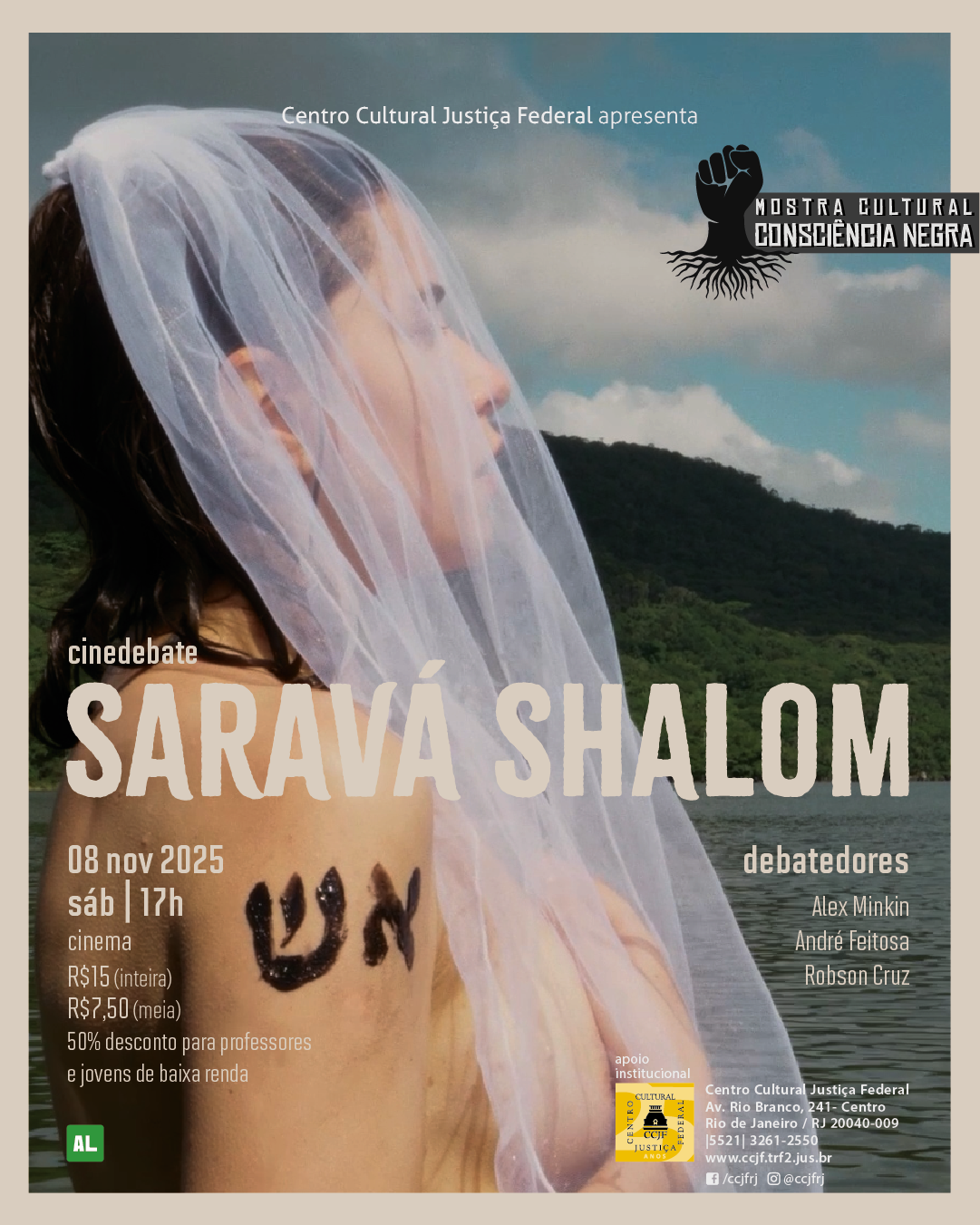
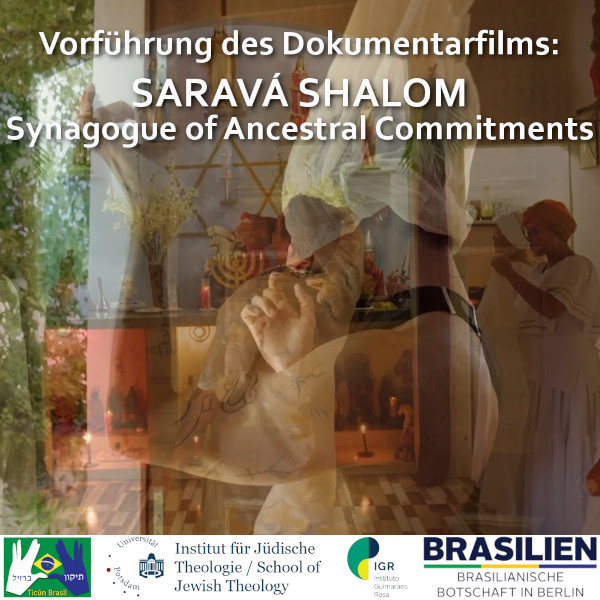
Sarava Shalom (Synagogue of Ancestral Commitments) is a poetic documentary about dialogue between Afro-Brazilian, Indigenous and Jewish mystical traditions. Brazil, 2026 | 82 min.
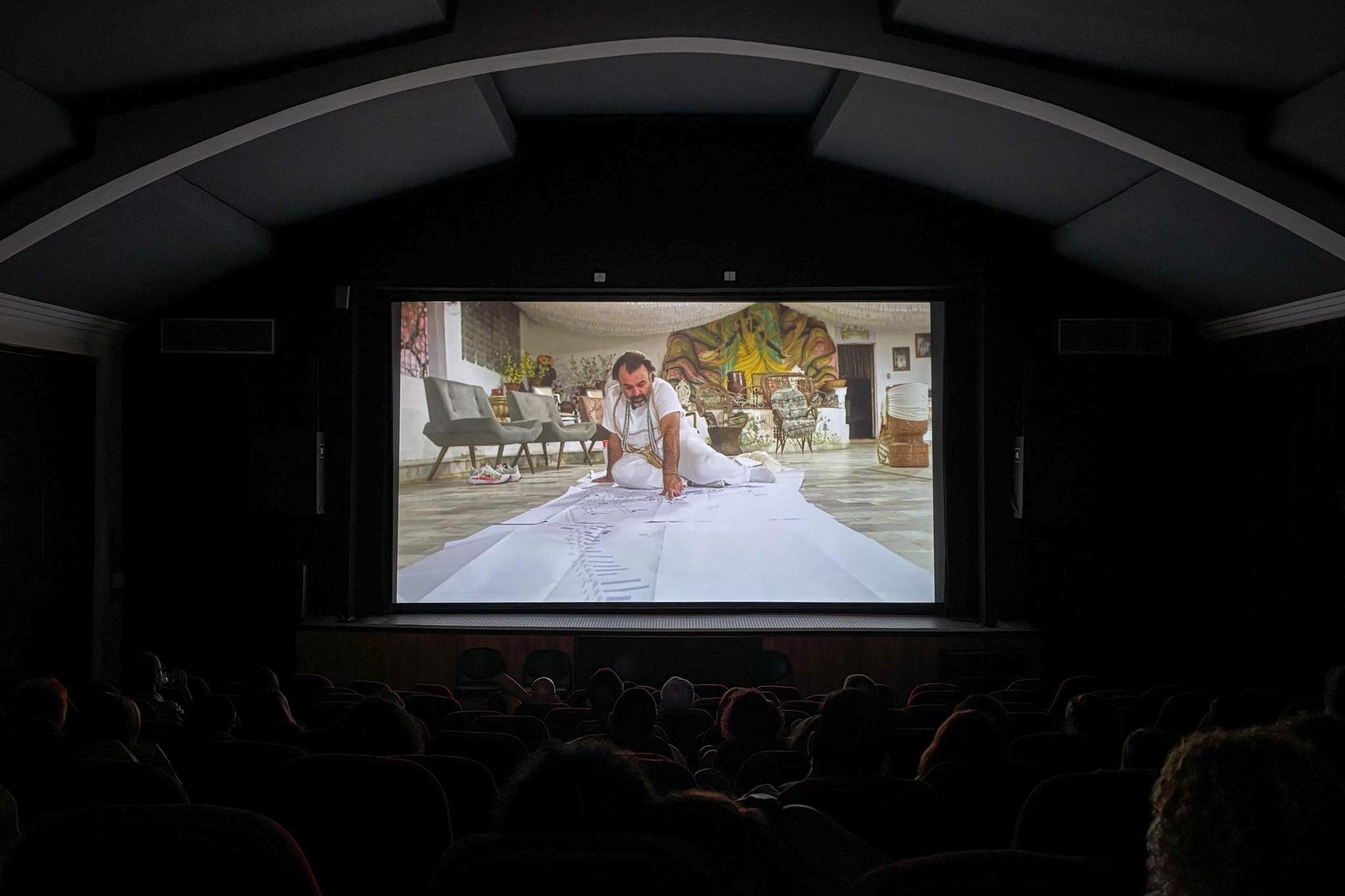
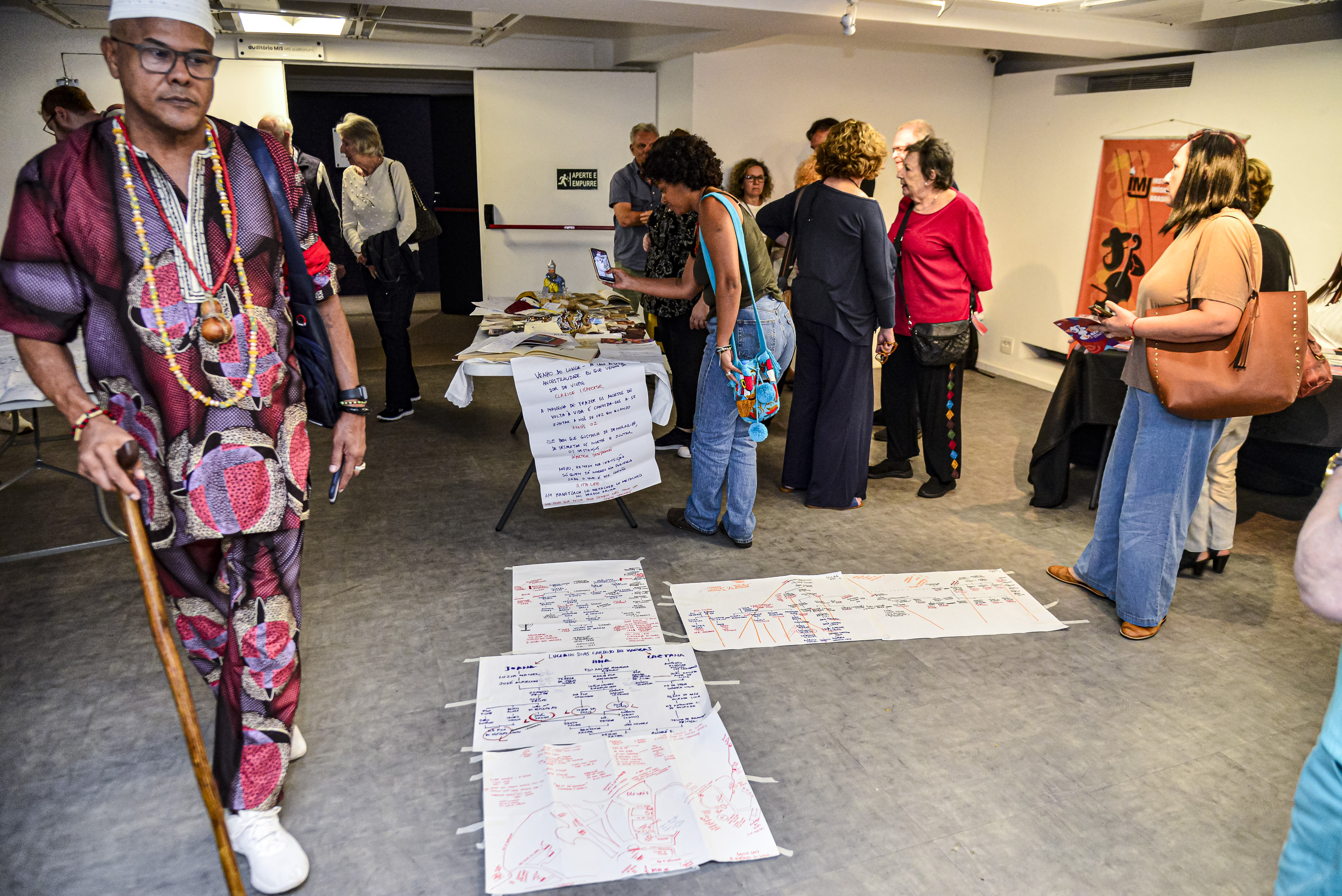
André Feitosa, artist from the Northern Brazil, discovered that his family descends from enslaved Africans, indigenous people and Jews who were forcibly converted by the Inquisition. André delved into the archives and reconstructed his family tree for dozens of generations. Where he lacked records, he consulted mediums in the Afro-Brazilian temples. The film travels from the sacred mountains in the south of Brazil to the backlands of Northeast, from the spiritist Jewish center in Rio de Janeiro to the Inquisition squares in Portugal weaving together worlds and diasporas in a single enchanted temple of the “Synagogue of Ancestral Commitments”.
Minkin constructs a poetic, visual and sonorous narrative about diasporas and ancestries that were entangled in the formation of Brazil. Saravá Shalom breaks historical silences, showing plurality of Jewish experiences.
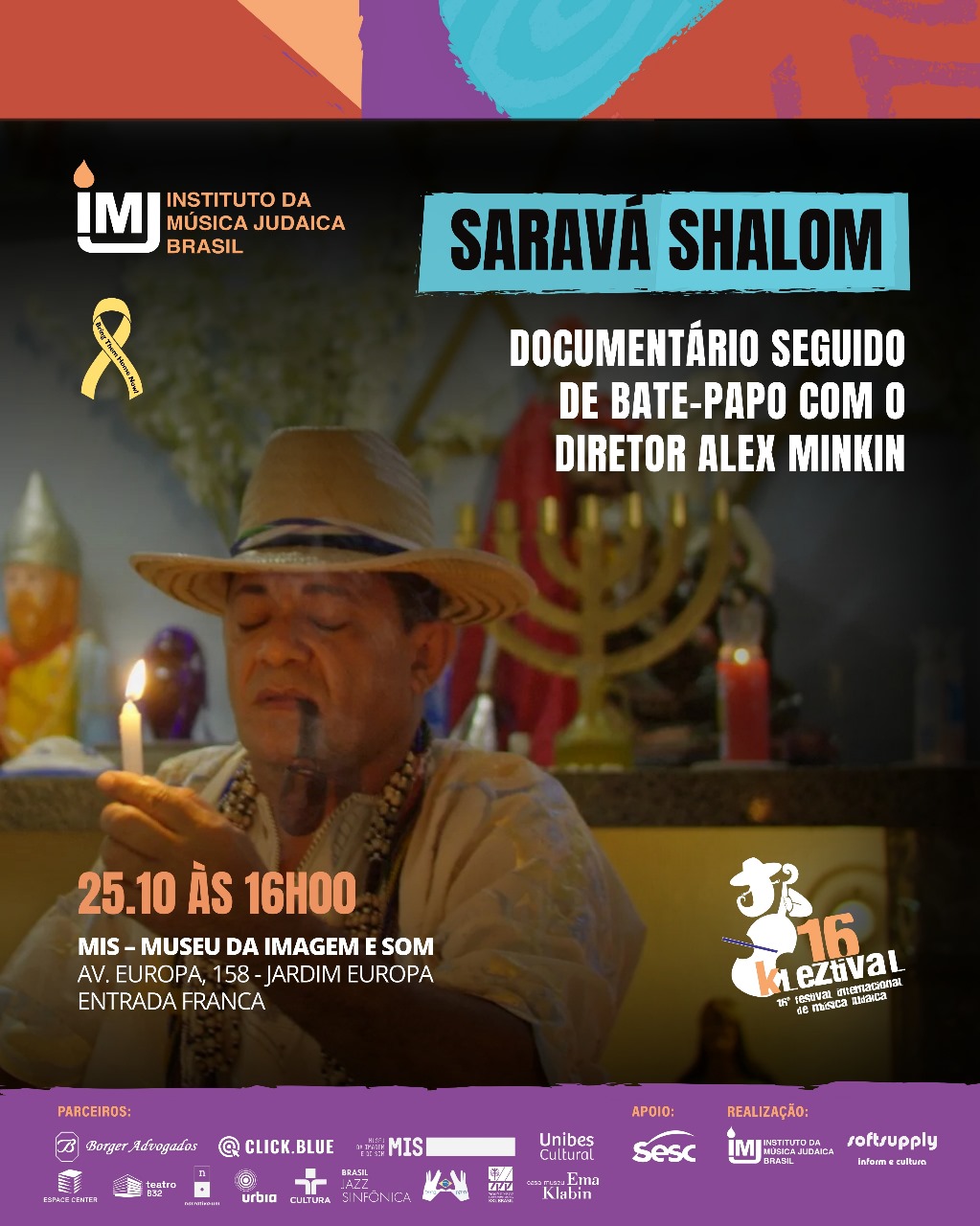
Sarava Shalom documents rare syncretic religious ceremonies, telling the stories of Brazilians who practice both Judaism and local mystical traditions by communicating with Jewish spirits. These encounters between present-day practitioners and their ancestors, or Biblical characters serve as antidotes for personal and historical traumas.
What was once a sign of secret faith, persecuted by the fires of the Inquisition, reappears in the Afro-Brazilian temples as a symbol of strength. The six-pointed star, engraved on the cloth of a congá or lit in the invisible design of a dance, carries a history that does not fade, only transforms. The documentary does not seek to explain this fusion: it embodies it. The film dwells in trance and charged silences. It shows the attempt of Yoruba – Yiddish dialogue without a need for translation. In this space the trauma is not overcome but welcomed and the traditions meet. –Carlos Mourão, O Otimista
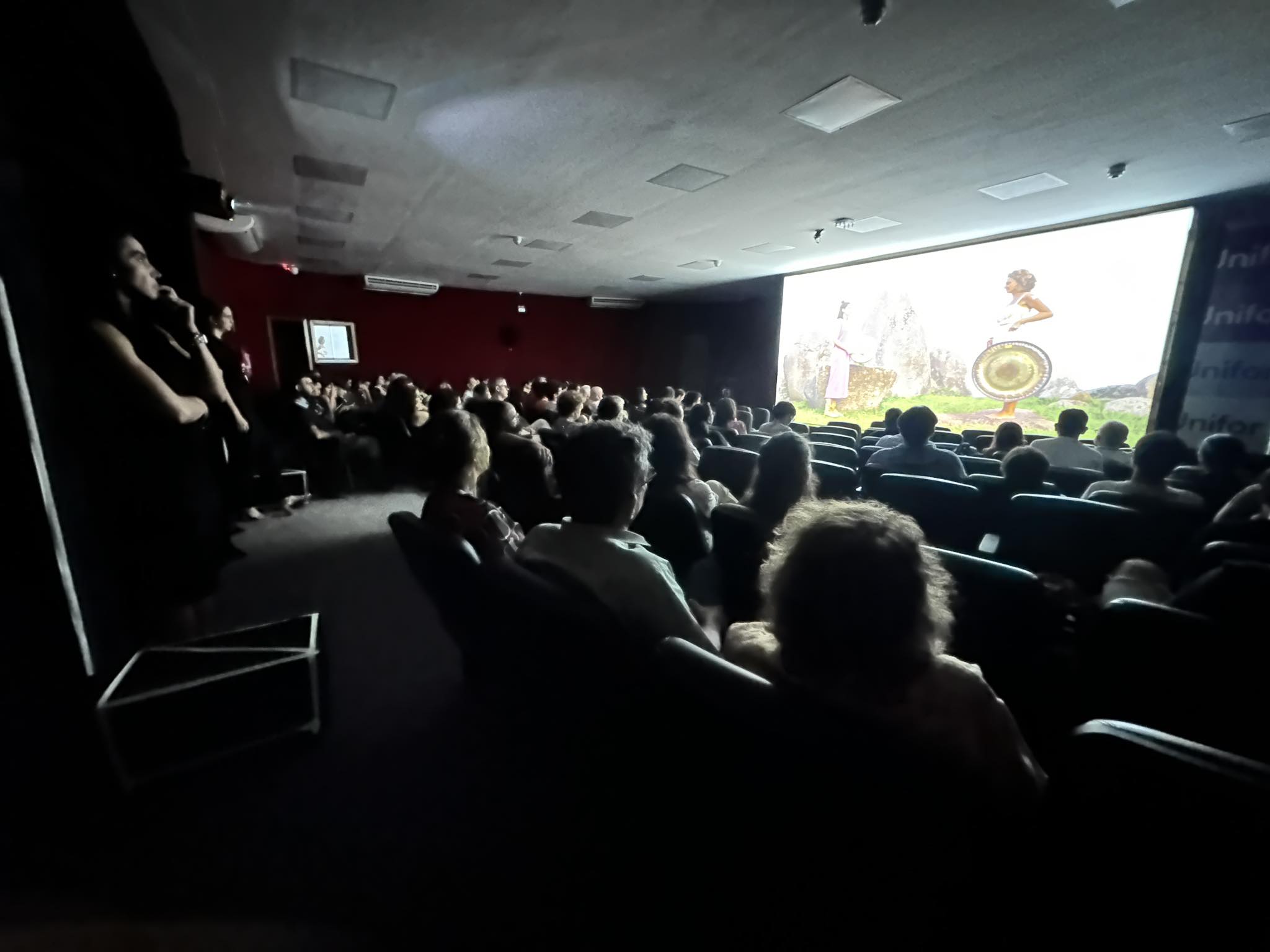
The film features descendants of Crypto-Jews in Ceará (North-Eastern Brazil) who honor their heritage through ancestral rituals of Candomblé and Umbanda. Sarava Shalom shows mystical ceremonies at Afro-Brazilian temples dedicated to memory of Jewish ancestors. The film concludes with ritual syncretic dance in the abandoned village in the back-lands of Ceará where Jews used to flee from the Inquisition.
The documentary director Alex Minkin has courage to openly address interactions between Judaism and Spiritism in Brazil. He approaches this subject, still almost a taboo, with freedom, depth and respect to the Jewish community.
Professor Jose Goldfarb, cultural director of Hebraica, São Paulo
Studies of Brazilian Jewish religious syncretism shown in Saravá Shalom, without moral judgements, with understanding and compassion, should be absolutely just as central to what we call Jewish theology as works of Martin Buber and Maimonides. The question is not whether it is kosher, or not. This is what Brazilian Jews do. Professor Jonathan Schorsch, Chair of Jewish Theology at Potsdam University
The film is a documentary, a work of sacred art and at the same time a tool for healing the traumas of religious intolerance over several generations. Through dances, songs, poems and ritual performances of artists, descendants of these traumas, filmed from the mountains of Florianópolis to the backlands of Ceará, the film offers Brazilian and international audiences creative lessons of coexistence.
Saravá Shalom celebrates the “impurity” of origins with the divinities and spirits that emerge from Afro-Brazilian traditions. It is an essay in ethnographic impressionism through the pains and delights of being Brazilian. It is also a space for reflection on the impact of diasporas and on how different cultures can come together in a single “enchanted temple”.
André of SARAVÁ SHALOM honors his Sephardic Jews ancestors, who fled the Inquisition and sought safe refuge in Brazil. Using Afro-Jewish syncretism, such as Kol-Nidrei recited over the berimbau, André seeks to recover his ancestry lost in the backlands of Ceará. Minkin continues to strive to reveal elements invisible to the common eye, helping us understand the cultural matrix that sustains modern Brazil.
–Decio Zylbersztajn, writer
Saravá Shalom project interviewed leading scholars of Afro-Brazilian religions and Jewish Spiritism, including Professors Sergio and Mundicarmo Ferreti, Reginaldo Prandi, Francisco Moreno de Carvalho, Andrea Kogan, Alberto Groisman, Adam Klin-Oron, Sam Glauber-Zimra and Father Alexandre Cumino. We hope to make these interviews available in 2026.
Saravá Shalom ended up being a love letter to Umbanda, Kardecism, Candomblé, and also very Jewish, but not in a traditional way. What it is not—it is not an academic film. I purposely left out all my interviews with professors. In the words of Jean Pouillon, “Only the non-believer believes that what the believer does is believe.” I wanted the film to speak from the inside, from the point of view of the participants, without judgments or lessons from academics.
Directed by Alex Minkin, New York – based visual anthropologist (Yeshiva University/Federal University of Sergipe), focusing his research on the intersections between Jewish and Brazilian cultures. In his articles, lectures, and the documentary Urban Orishas (2022), he presents the stories of spiritual practitioners in a format that reflects the mystery of these experiences and their groundedness in history and myth. Alex Minkin is the founder of Ticún Brasil, which offers cultural and volunteer opportunities for travelers to Brazil, as well as cultural activities in New York.
Alex Minkin can be included in the tradition of foreign scholars and artists, from Pierre Verger, Carybé and Diana Brown to Vincent Moon, who have immersed themselves in Brazilian culture, producing engaging research and art that has increasingly inspired foreigners and Brazilians alike. With Saravá Shalom, Minkin makes a bold and profound artistic statement that poetically transforms untold stories of Brazilian interfaith dialogue, concerned above all with showing the wonderful complexity of the human soul.
-Reginaldo Prandi
director| Alex Minkin music | Bia Schneider, Vani Levi, Alex Lima, original recordings from umbanda and candomblé temples of Ceará, Brazil, Nika Stewart and Naná Vasconcelos, Ensemble Nuria, Coro do instituto israelita brasileiro de cultura e educação, maestro Henrique Morelenbaum video | Carlos Lenine, Alex Minkin, Rafael Coelho, Felipe Alves, Igor Cabral, Nicholas Oliveira, Serj Sigmundr, Vincent Moon, Sergio Gomes



 ticunbrasil.com